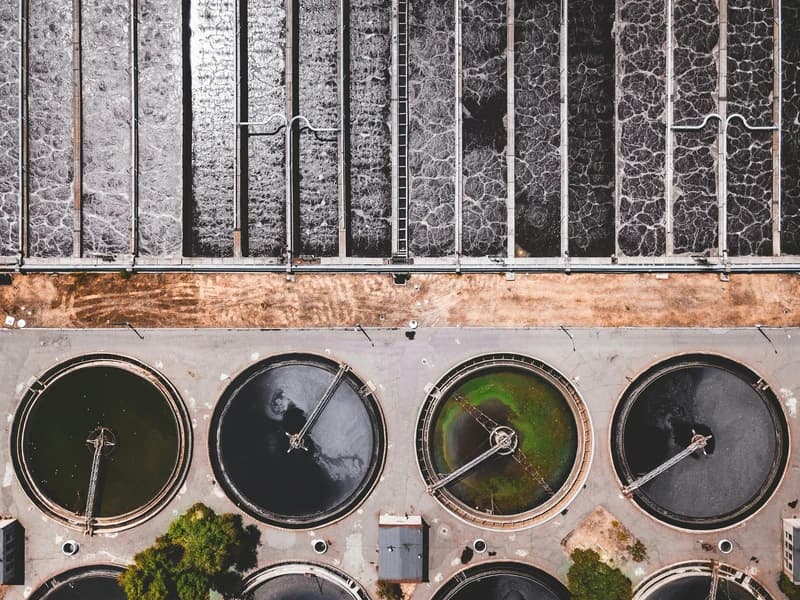
Wastewater reuse at Riyadh West: safety and efficiency
Water is one of our most precious resources, so ensuring the smooth management of water treatment operations is a huge responsibility. Wastewater treatment is a complex process, and at Staterra, we're passionate about turning challenges into opportunities. We completed a comprehensive Hazard and...
Water is one of our most precious resources, so ensuring the smooth management of water treatment operations is a huge responsibility. Wastewater treatment is a complex process, and at Staterra, we’re passionate about turning challenges into opportunities.
We completed a comprehensive Hazard and Operability (HAZOP) study for our client, the Riyadh West Wastewater Treatment Plant, to identify potential hazards and operability issues. We can only manage what we measure, and a HAZOP study gives us the data we need to make the right decisions.
What is wastewater treatment?
Turning raw sewage into clean water might sound like magic, but it’s really about using the right technology and processes.
The goal is to remove contaminants and make the water safe for irrigation and other non-drinking uses.
This approach helps address water scarcity and promotes environmental sustainability: wastewater shouldn’t be wasted.

A deep dive into the HAZOP study
The HAZOP study at the Riyadh West Wastewater Treatment Plant was a meticulous process aimed at uncovering potential risks and devising strategies to mitigate them. Initially, the project involved a detailed review of the plant’s design and operational procedures. This foundational assessment was critical for understanding the flow of wastewater through various treatment stages, and for identifying critical control points.
A multidisciplinary team, including process engineers, safety experts, and plant operators, was assembled to conduct the study. HAZOP studies often involve cross-functional collaboration, and our team’s combined expertise ensured a 360 degree analysis of potential hazards.
“Our comprehensive approach to the HAZOP study has enabled us to identify and mitigate risks effectively, ensuring the Riyadh West Wastewater Treatment Plant operates at the highest standards of safety and efficiency,” said Haitham Al Tamimi, Consultant at Staterra.
Key findings and recommendations
The HAZOP study identified several critical areas for improvement to enhance safety and efficiency at the plant.
Chemical handling:
the study highlighted risks associated with the handling and storage of chemicals like chlorine and sodium hydroxide. Recommendations included improving storage facilities, implementing stricter handling protocols, and enhancing staff training.
Sludge processing:
issues in sludge processing and disposal were identified. The study recommended upgrading sludge treatment systems and introducing rigorous monitoring to ensure environmental compliance.
Gas emissions:
potential risks from gas emissions were identified, prompting recommendations for installing advanced gas detection and ventilation systems to mitigate harmful emissions.
These recommendations aim to improve operational efficiency, ensure regulatory compliance, and enhance safety for plant personnel. Our client was keen to implement any and all changes needed to stay ahead of the curve and guarantee optimal operations.
Why this matters
A HAZOP study does more than just tick regulatory boxes. By uncovering and addressing potential hazards, it transforms the workplace into a safer, more efficient environment. This proactive approach not only protects the well-being of staff but also optimises operations, paving the way for the plant’s long-term success.
Looking ahead
The HAZOP study at the Riyadh West Wastewater Treatment Plant exemplifies Staterra’s commitment to safety and operational excellence. By uncovering and addressing potential hazards, we ensure that the plant operates smoothly and safely, benefiting both the environment and the community.
Get in touch
Interested in learning how a HAZOP study can enhance the safety and efficiency of your operations?
Don’t wait for a hazard to turn into an incident. Reach out to Staterra today to discover more about our comprehensive risk assessment services and how we can help you achieve operational excellence. Let us help you create a safer, more efficient future.
Let's discuss your project challenges
Our team supports clients with practical environmental insight from planning through delivery.
Contact us
Our Latest Posts

Protecting what's below: groundwater contaminant transport modelling for petrochemical capacity expansion in Jubail Industrial City
When a petrochemical facility in Jubail Industrial City undertook a significant debottlenecking programme to increase production capacity, the project triggered a critical environmental obligation: demonstrating, with technical certainty, that the expansion would not compromise groundwater quality...
Environmental Modelling as a decision-support tool for impact assessment
You're trying to assess the environmental impact of a project that involves dozens of interacting variables – emissions, drainage, wind, terrain, receptors, land use, and operational scenarios. Looking at each one in isolation won't give you the answer. It will give you a fragment. That's where...

Your EIA is on the critical path. Don't let it become the bottleneck.
Four facilities. Ninety days. A Category-2 EIA that has to satisfy NCEC, align with SAEP-13, include a Health Impact Assessment, and land a Construction Environmental Management Plan with a dust mitigation component, all before a single upgrade to Dhahran, Qatif, or Al Hasa's fire and oily water...