Saudi Arabia Environmental Permitting 2025: A Step-by-Step Guide to NCEC and RCJY Compliance
In our previous article, "Staterra's Multi-Level Approach to Environmental Regulations in Saudi Arabia", we discussed Saudi Arabia's evolving environmental framework. Today, we delve deeper into the National Centre for Environmental Compliance (NCEC) and Royal Commission for Jubail and Yanbu (RCJY)...
In our previous article, “Staterra’s Multi-Level Approach to Environmental Regulations in Saudi Arabia”, we discussed Saudi Arabia’s evolving environmental framework. Today, we delve deeper into the National Centre for Environmental Compliance (NCEC) and Royal Commission for Jubail and Yanbu (RCJY) permitting processes, providing actionable insights grounded in official government regulations.
- Who oversees environmental permits?
NCEC: Nationwide Environmental Authority
The NCEC regulates projects outside industrial cities, enforcing standards for air, water, land conservation and waste management. Key responsibilities include:
- Categorising projects by severity of environmental impact (Category 1–3).
- Mandating Environmental Impact Assessments (EIAs) for high-impact projects.
- Issuing permits (Permit to Construct & Permit to Operate) via its digital portal, with fees.
Ranging from
1,000 SAR
(Category 1) to
275,000 SAR
(Category 3).
NB: RCER 2025 just recently issued 05.2025
RCJY: Industrial City Regulator
The RCJY governs Jubail, Yanbu, Jizan and Ras Al Khair under the Royal Commission Environmental Regulations (RCER-2025). Key requirements include:
- Third-party EIAs for high-risk projects (Type I/II).
- Compliance with MARPOL 73/78 Annex I-VI and specifically Annex VI for marine pollution prevention.
- The permitting Process: NCEC vs RCJY
NCEC Workflow
Classification
: submit project details via the NCEC portal. Fees are auto calculated based upon impact level.
Environmental Scoping Report
: to be prepared and submitted to Regulatory Authority which lays out the roadmap and intentions of the EIA Study Report.
EIA Preparation
:
- Category 3 projects require a full EIA, including 5+ years of baseline air/water data.
Public Consultation
: Mandatory 30-day period for Category 3 projects.
Post-Approval Compliance
: Install NCEC-certified IoT sensors for real-time monitoring. Non-compliance risks fine up to 100,000 SAR.
RCJY Workflow
Pre-Consultation
: Align project design with RCER-2025 standards.
Joint Committee Review
: Coastal projects require Saudi Red Sea Authority (SRSA) input.
Permit to Operate (EPO)
: Issued post-construction audit.

- Common pitfalls & penalties…and solutions!
Pitfall
Problem
Solution
1. Incomplete Baseline Data
60% of EIA rejections stem fom insufficient air/water quality metrics.
– Collect 5+ years of historical data for air, water, and soil, adhering to NCEC-approved monitoring protocols.
– Use government databases like the RCJY’s groundwater monitoring guidelines (Appendix E of RCER-2025).
2. Misaligned Documentation
Using NCEC templates for RCJY projects causes delays.
– Always verify which authority governs your site (NCEC or RCJY) and use the correct templates.
– For RCJY projects, follow RCER-2025 Volume II formatting rules for EIAs, including BAT assessments and marine impact studies.
3. Slow Response to Queries
NCEC allows 10 days for revisions; delays trigger cancellation.
– Assign a dedicated team to monitor the NCEC/RCJY portal daily and respond within 3–5 days.
– Use project management tools to track deadlines and automate reminders for regulatory follow-ups.
4. Overlooked Stakeholders
Skipping public consultation risks fines up to 20,000 SAR/day.
– For Category 3/Type I projects, conduct pre-consultation meetings with communities to address concerns before formal submissions.
– Document all interactions and submit evidence (e.g., meeting minutes, revised mitigation plans) to regulators.
- Fee structures (2025)
Authority
Project Type
Fee (SAR)
NCEC
Category 1 (Low Impact)
1,000
NCEC
Category 2 (Moderate)
2,000
NCEC
Category 3 (High Impact)
8,000
RCJY
Type I (High Risk)
8,000
Strategies for faster approvals

Leverage Digital Tools
: submit via NCEC’s portal to reduce processing time by 30%.
Pre-Engage Regulators
: clarify RCER-2025 requirements early for RCJY projects.
Automate Compliance
: use NCEC-certified IoT sensors for real-time reporting.
Hire Accredited Experts
: consultants, like us at
Staterra
, pre-approved by RCJY streamline EIAs.
- Vision 2030 and Sustainability
Saudi Arabia’s permitting system aligns with the Saudi Green Initiative, which aims to reduce emissions by 278 million tons annually by 2030 and protect 30% of land/sea. Compliance with NCEC/RCJY regulations directly supports these goals.
What’s next?
In Part 3, we’ll explore how global standards including World Bank, International Finance Corporation and Equator Principles as well as ISO 14001 integrate with and comply to Saudi regulations. Learn how to balance international frameworks with local requirements under Vision 2030.
Ready to fast-track your Saudi environmental permits?
This article provides a solid overview, but for a complete, step-by-step roadmap to navigating NCEC and RCJY compliance in Saudi Arabia, download our comprehensive ‘KSA Permits: Your 2025 Guide‘ now! It’s fully updated for April 2025 and includes an essential checklist to ensure your project’s swift approval.
[Download Your FREE 2025 KSA Permits Guide Here!]
This guide references official Saudi government regulations. For project-specific advice, consult accredited experts like Staterra or regulatory authorities directly.
Let's discuss your project challenges
Our team supports clients with practical environmental insight from planning through delivery.
Contact us
Our Latest Posts

Protecting what's below: groundwater contaminant transport modelling for petrochemical capacity expansion in Jubail Industrial City
When a petrochemical facility in Jubail Industrial City undertook a significant debottlenecking programme to increase production capacity, the project triggered a critical environmental obligation: demonstrating, with technical certainty, that the expansion would not compromise groundwater quality...
Environmental Modelling as a decision-support tool for impact assessment
You're trying to assess the environmental impact of a project that involves dozens of interacting variables – emissions, drainage, wind, terrain, receptors, land use, and operational scenarios. Looking at each one in isolation won't give you the answer. It will give you a fragment. That's where...
Your EIA is on the critical path. Don't let it become the bottleneck.
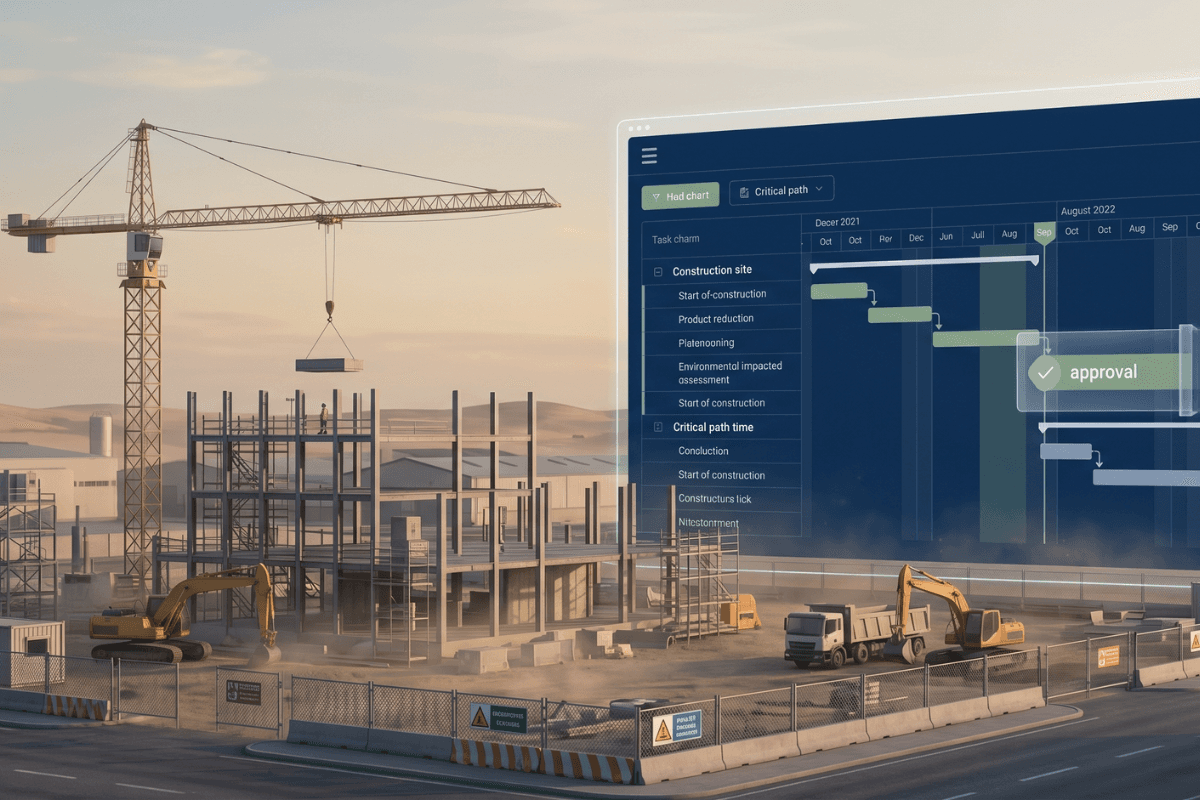
Four facilities. Ninety days. A Category-2 EIA that has to satisfy NCEC, align with SAEP-13, include a Health Impact Assessment, and land a Construction Environmental Management Plan with a dust mitigation component, all before a single upgrade to Dhahran, Qatif, or Al Hasa's fire and oily water...