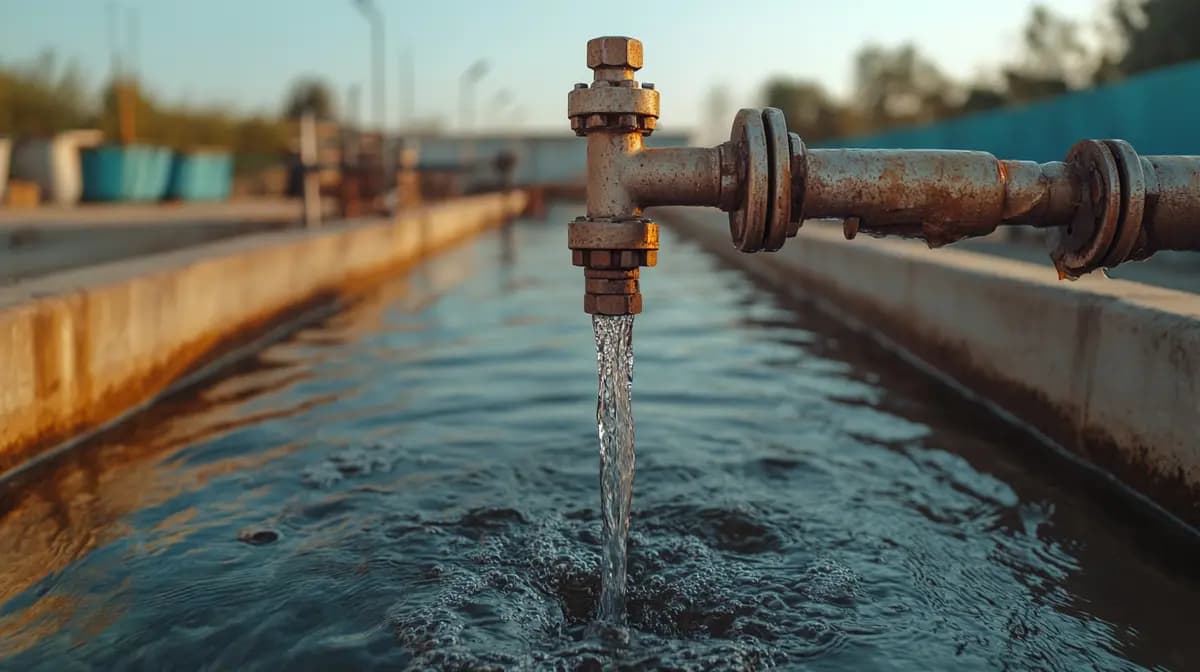
Staterra enhances safety and efficiency of Riyadh Wastewater Treatment Plant
Staterra recently conducted a comprehensive Hazard and Operability (HAZOP) study at the Qiddiya Wastewater Treatment Plant-3 in Riyadh City, Saudi Arabia. This proactive risk assessment aligns with our commitment to safety and sustainability in critical infrastructure projects, as highlighted in...
Staterra recently conducted a comprehensive Hazard and Operability (HAZOP) study at the Qiddiya Wastewater Treatment Plant-3 in Riyadh City, Saudi Arabia. This proactive risk assessment aligns with our commitment to safety and sustainability in critical infrastructure projects, as highlighted in our previous work at Diriyah Gate and within the industrial sector.
Methodical approach to risk Identification
The HAZOP study involved a systematic analysis of the plant’s processes. Our team of experts, including Abdulrahman Farhat and Mohammed Ayesh, meticulously examined Piping & Instrumentation Diagrams (P&IDs) to identify potential deviations from normal operating conditions. This approach, guided by international standards like IEC 61882, allowed us to pinpoint potential hazards and recommend effective risk mitigation strategies.
For instance, the team examined potential deviations related to flow rates, pressure levels, temperature fluctuations, and tank levels. By identifying these potential deviations, the team was able to recommend safeguards to prevent incidents such as overflows, equipment damage, or process upsets.

Key findings and recommendations
The HAZOP study focused on critical parameters such as flow, pressure, temperature, and level. Through rigorous analysis, our team identified 19 recommendations to enhance the plant’s safety, efficiency, and environmental performance. These recommendations encompass equipment selection, control system design, and operational procedures.
For example, the study might have recommended the installation of redundant safety valves to prevent overpressure scenarios or the implementation of advanced process control strategies to optimise plant operations.
Delivering value
Staterra’s HAZOP study provides significant benefits to our clients, including:
Enhanced safety:
proactive
hazard identification
and mitigation help prevent accidents and injuries, safeguarding workers and the community.
Improved operational efficiency:
addressing operability issues leads to increased uptime, reduced maintenance costs, and optimised performance.
Reduced environmental impact:
mitigating potential environmental risks minimises the plant’s ecological footprint.
Regulatory compliance:
the study ensures alignment with safety and
environmental regulations
.
Enhanced reputation:
demonstrating a commitment to safety and sustainability builds trust and strengthens our
clients’ reputation
.
Your partner in Process Safety Management
This HAZOP study exemplifies Staterra’s dedication to excellence in Process Safety Management (PSM).
Our experienced consultants leverage industry best practices and regulatory knowledge to deliver high-quality solutions. We are committed to helping our clients achieve their goals while upholding the highest safety and environmental standards.
Contact us today to learn how our PSM expertise can benefit your projects and operations.

Let's discuss your project challenges
Our team supports clients with practical environmental insight from planning through delivery.
Contact us
Our Latest Posts

Protecting what's below: groundwater contaminant transport modelling for petrochemical capacity expansion in Jubail Industrial City
When a petrochemical facility in Jubail Industrial City undertook a significant debottlenecking programme to increase production capacity, the project triggered a critical environmental obligation: demonstrating, with technical certainty, that the expansion would not compromise groundwater quality...
Environmental Modelling as a decision-support tool for impact assessment
You're trying to assess the environmental impact of a project that involves dozens of interacting variables – emissions, drainage, wind, terrain, receptors, land use, and operational scenarios. Looking at each one in isolation won't give you the answer. It will give you a fragment. That's where...

Your EIA is on the critical path. Don't let it become the bottleneck.
Four facilities. Ninety days. A Category-2 EIA that has to satisfy NCEC, align with SAEP-13, include a Health Impact Assessment, and land a Construction Environmental Management Plan with a dust mitigation component, all before a single upgrade to Dhahran, Qatif, or Al Hasa's fire and oily water...