
Building heat resilience in the Gulf: a global imperative
The Gulf is running on hot air
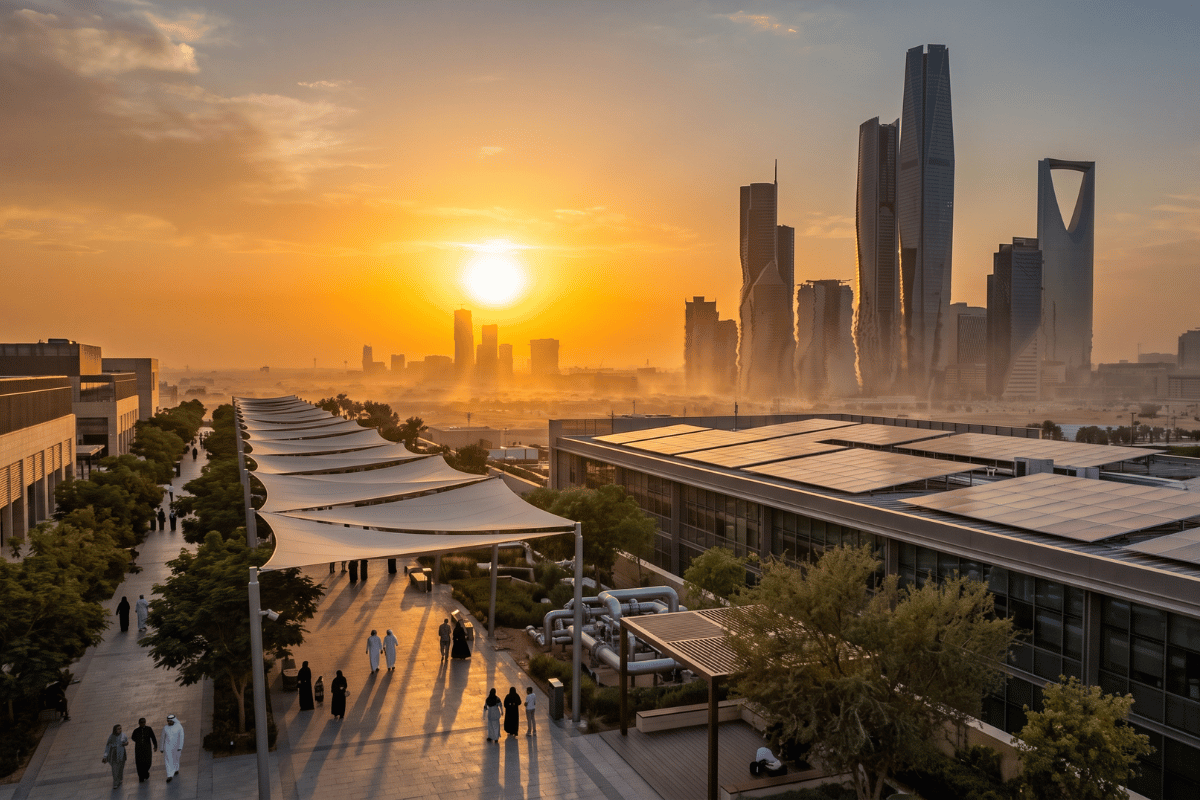
Summers in the Gulf region are brutal. Temperatures that would shut down a European city are, in much of the region, just another day in July. But “brutal” is becoming a clinical understatement – the margin between discomfort and danger is shrinking faster than most people realise.
Cities across the GCC are warming faster than the global average. Under high-emissions pathways, summer maximum temperatures in major Gulf cities could climb roughly 0.6°C per decade, with daytime extremes in some locations potentially exceeding 55°C before the century is out, according to peer-reviewed projections for the region. This isn’t a distant hypothetical – it’s the trajectory we’re on if emissions continue unchecked, arriving on top of an urban heat island effect that already makes cities measurably hotter than surrounding areas, compounded by coastal humidity that turns warm air genuinely physiologically threatening.
That last point deserves a closer look. Temperature alone doesn’t tell the full story of heat danger. When humidity is high, the body loses its main cooling mechanism: sweat can’t evaporate efficiently, so core temperature keeps rising. Researchers tracking “wet-bulb” or “humid heat” metrics, a concern flagged in the IPCC’s Sixth Assessment Report, find that parts of the Middle East and North Africa are on track for prolonged stretches, not just isolated extreme days, where outdoor conditions without access to cooling exceed the limits of human survivability. Business as usual is not an option.
Why this isn’t just a regional story
The Gulf often gets framed as a prosperous region that can afford to blast air conditioning and engineer its way out of problems. That framing misses the point, and it undersells the stakes for everyone else.
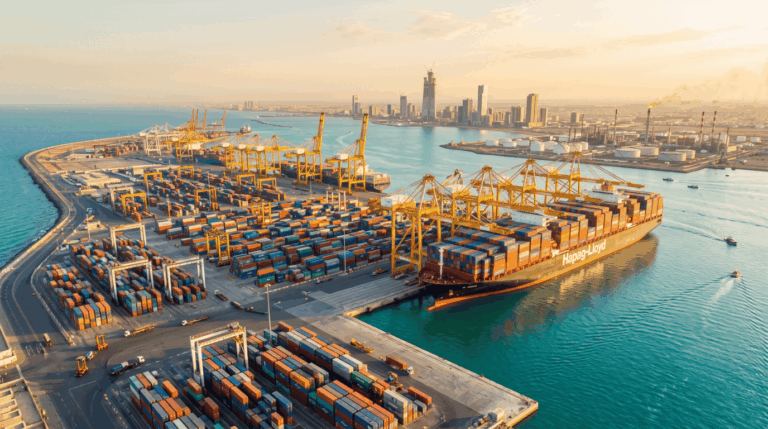
The GCC is a major global energy producer, a critical logistics hub, and a rapidly growing tourism destination. When the Gulf overheats, the consequences don’t stay inside its borders. Power systems strain under surging cooling demand. Outdoor labor productivity drops, affecting everything from construction timelines to port operations. Health systems face unprecedented pressure. Supply chains dependent on Gulf infrastructure stretch and, in some scenarios, snap.
There’s a second reason the world should care about what happens in the Gulf: the choices made here on cooling technology and urban design will echo globally. The region is scaling fast – in population, in built infrastructure, in energy consumption. Getting the Gulf’s approach right isn’t a local interest – it’s a global one. UN-Habitat’s work on cities and human settlements offers a useful lens here, including through its Global Chief Heat Officer initiative: extreme heat is not only a meteorological hazard, it’s an urban development outcome shaped by land use, materials, street geometry, housing quality, and who has access to shade, water, and cooling.
What the international community is saying and doing
The urgency of extreme heat and sustainable cooling has climbed rapidly up the agenda of international science and policy bodies, and the Gulf sits squarely in the center of their concern.
The IPCC’s Sixth Assessment Report is unambiguous: adaptation and mitigation are not alternative strategies – they’re both necessary and complementary. The World Health Organization’s heat-health action planning guidance emphasises integrated early warning systems, targeted protection for the most vulnerable, and health system preparedness that doesn’t wait for a crisis to begin. At the multilateral level, the UNEP Cool Coalition and Global Cooling Pledge push governments and industry toward cutting cooling-related emissions, improving appliance efficiency standards, and expanding access to sustainable cooling technology.
Regional analysts have gone further, with the Observer Research Foundation calling for a dedicated Heat Resilience Roadmap for the Gulf – a coordinated architecture that integrates anticipatory governance, sustainable cooling deployment, occupational health protections, and long-term urban planning reform. In 2025, the World Bank published a Handbook on Urban Heat Management in the Global South, developed with contributions from UN-Habitat and UNEP, urging cities to move from short-term, event-by-event response toward long-term heat risk management that protects health, livelihoods, infrastructure performance, and equitable access to sustainable cooling.
Translating science into action: where Staterra comes in
Understanding the roadmap is the easy part. Implementing it, across diverse cities, regulatory environments, asset types, and funding structures, is where most efforts stall. That’s the gap Staterra was built to close.
Founded in 2016, Staterra’s value lies in integration – combining climate scientists, engineers, public health specialists, urban planners, and finance experts who work across the full arc of a resilience project, from initial risk assessment through implementation, monitoring, and reporting.
Climate risk assessment and modeling. Before money moves, you need to understand what you’re facing – not in broad regional terms, but at the asset and city level. We provide state-of-the-art climate projections and sectoral risk assessments that quantify future heat exposure, identify vulnerable infrastructure and populations, and inform investment prioritisation. This granular, forward-looking analysis is the foundation everything else is built on.
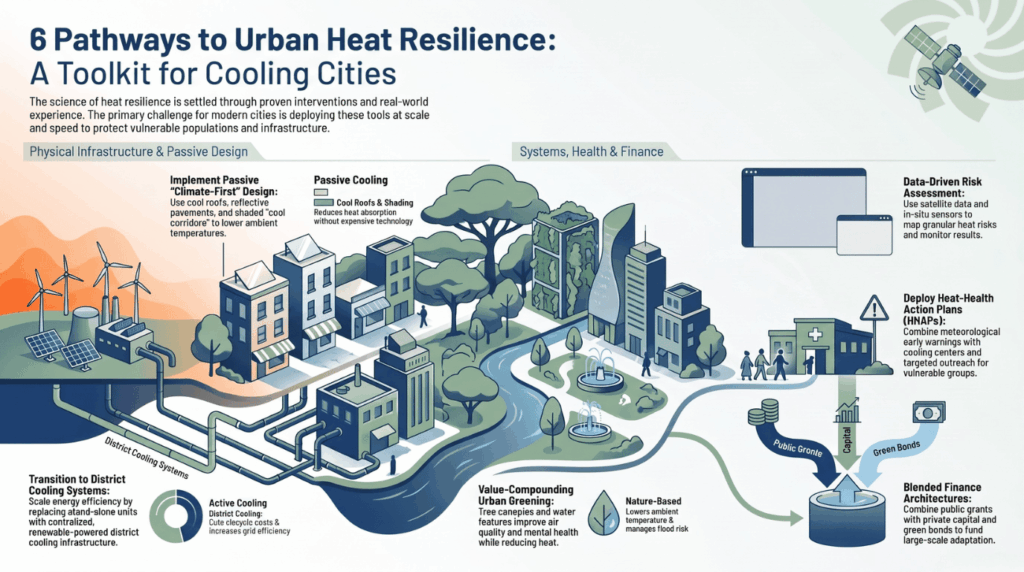
Urban and infrastructure adaptation planning. Our geospatial and remote-sensing capabilities support high-resolution urban heat mapping and scenario analysis – the evidence base that moves master planning conversations from intuition to data. Integrated urban adaptation planning, green infrastructure design, and passive cooling strategy work together to reduce the urban heat island effect and lower long-term cooling demand across entire districts.
Sustainable cooling strategy and energy integration. Advising on district cooling feasibility isn’t just a technical exercise – it requires connecting the engineering with the regulatory, financial, and operational environment that determines whether a project gets built and runs as intended. Our approach links technical design with governance and financial frameworks specifically to avoid maladaptation: cooling infrastructure that solves today’s problem while compounding tomorrow’s.
Monitoring, evaluation, and digital tools. Our digital platforms and IoT monitoring capabilities enable real-time tracking of ambient conditions, energy use, and health indicators – giving you the feedback loop you need to manage adaptively and report transparently to stakeholders, funders, and regulators.
Climate finance and project structuring. A technically sound adaptation project that can’t attract capital is just a proposal. We support green finance readiness, structure green bonds and sustainability-linked instruments, and prepare the bankable project documentation that moves investment from intention to commitment. This is the connective tissue between climate science and capital markets, and it’s where many well-designed projects succeed or fail.
The Gulf has a real chance to lead – not just in protecting its people and economy, but in proving to the world what scalable heat resilience looks like. Success means rolling out sustainable cooling at scale, embedding renewables into the cooling supply chain, redesigning cities for extreme summers, and building fair financial systems to fund adaptation.
Staterra brings the tools to make this happen: advanced environmental assessments, climate and sustainability consulting, air quality and ecological modelling, remediation and marine protection, and ESG frameworks that unlock equitable financing. These are the moves that decide whether the region sets the pace for the century, or spends it chasing from behind.
Ready to build heat resilience into your next project, not bolt it on after the fact? Talk to our climate and sustainability team and let’s get started.